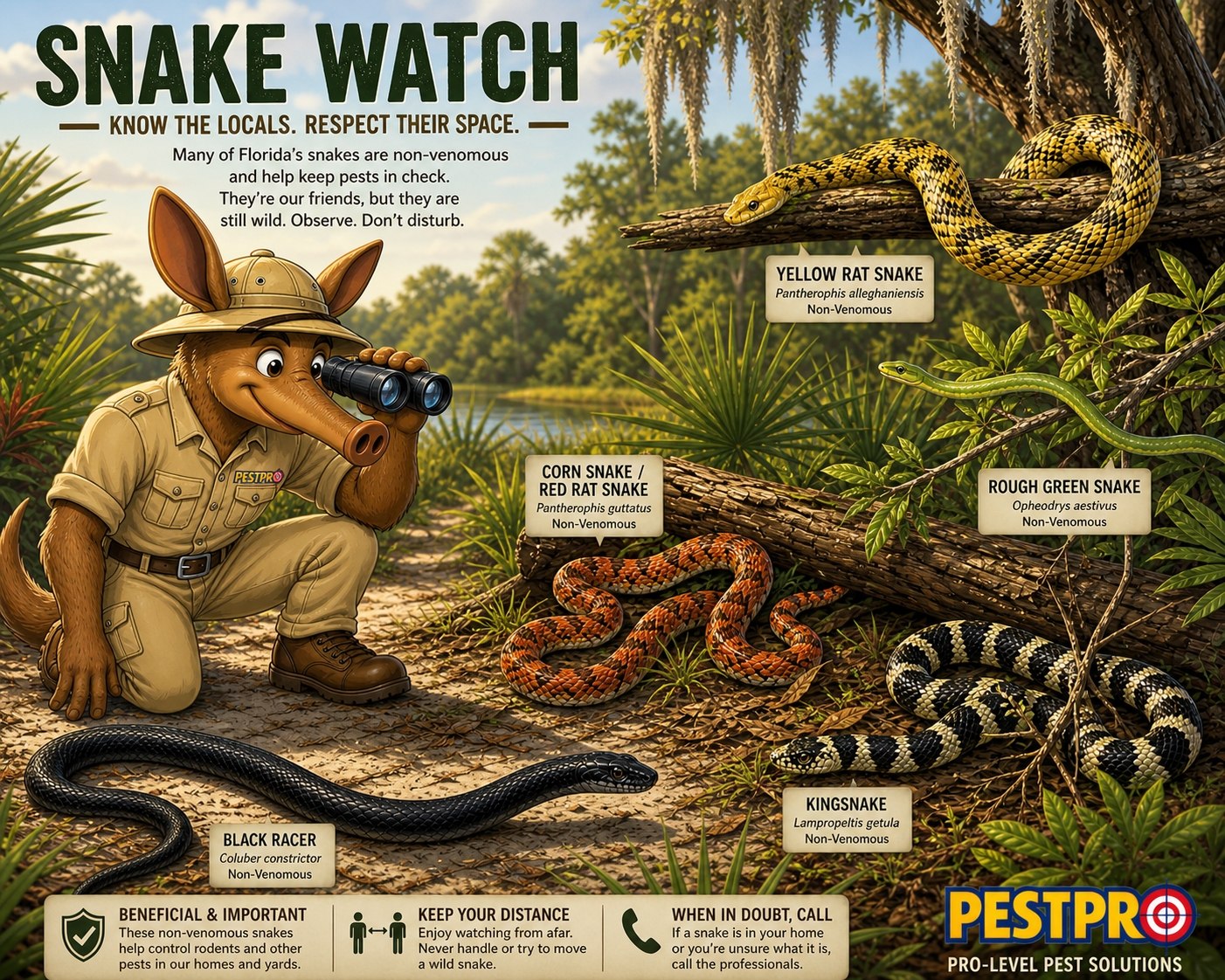
Snakes get a bad rap. Most of the time, they've earned it for nothing.
Florida has around 50 native snake species. Only 6 are venomous. The other 44 are not only harmless but actively working to make your yard, garden, and neighborhood a healthier place to live. The fear most people carry about snakes is rooted in instinct, not reality. And in Florida specifically, that fear causes a lot of unnecessary harm to animals that were on your side all along.
Why Most Florida Snakes Are Your Allies
Snakes are one of nature's most efficient pest controllers. They keep rodent populations in check, reduce the number of insects, and help maintain balance in the local food chain. Remove them from the picture and the ecosystem starts to feel it quickly. Mice and rats multiply. Insect populations spike. The natural order breaks down in ways that ripple into your home and garden.
They also don't want anything to do with you. The vast majority of Florida snakes are non-aggressive. When they show up in your yard, they're not looking for a confrontation. They're hunting, sheltering, or passing through. Given the chance, they'll leave before you ever know they were there.
The Good Ones Working for You
Black Racer
One of the most common snakes in Florida. Fast, shiny black, and found in residential yards across the state. Excellent at controlling rodent populations. If you see one darting across your driveway, consider yourself lucky.
Corn Snake (Red Rat Snake)
Docile, colorful, and a relentless predator of rats and mice. Farmers have known for generations that finding a corn snake on the property is good news. One of Florida's most recognized and harmless snakes.
Yellow Rat Snake
A skilled climber that makes its way into trees, rafters, and outbuildings. Where yellow rat snakes set up, rodent populations drop. Often spotted in older structures and wooded areas throughout Florida.
Rough Green Snake
Slender and bright green, this one blends seamlessly into shrubs and vines. Feeds almost entirely on insects and is completely harmless to people. One of the gentler members of Florida's snake community.
Kingsnake
This is the one that actively hunts venomous snakes and is immune to their venom. Having a Kingsnake in your yard is genuine natural protection. Found throughout Florida in a variety of habitats.
The Role Snakes Play in the Ecosystem
Beyond your yard, snakes are a critical piece of Florida's food chain. They control prey species that would otherwise overpopulate and damage crops, gardens, and the broader environment. They're also prey themselves for hawks, owls, and other predators higher up the chain.
Every species in that web exists in balance. Snakes sit in the middle of it. A property with a healthy snake population is a sign of a functioning, balanced ecosystem. That's not a problem to solve. That's the system working the way it's supposed to.
Worth knowing: Florida Fish and Wildlife Conservation Commission lists the vast majority of Florida snakes as protected wildlife. Killing a non-venomous snake is not just unnecessary, it can carry legal consequences depending on the species and circumstances.
The One Rule That Applies to All Snakes
Venomous or not, the rule never changes: observe from a distance and leave it alone. Even the most harmless snake will bite if it feels cornered or threatened. And misidentifying a venomous one is a risk no one should take.
If a snake is inside your home or in a space where it cannot be safely avoided, call a licensed wildlife or pest professional. Do not attempt to handle or move it yourself.
Safety note: A snake that feels threatened will stand its ground. Never try to pick up, pin, or relocate a wild snake regardless of whether you believe it to be venomous. Even experienced professionals use proper tools and protective equipment.
Florida's Venomous Snakes: Know What to Look For
Florida has 6 venomous snake species. Knowing how to identify them is worth the few minutes it takes. Keep your distance from anything that matches these descriptions.
Eastern Diamondback Rattlesnake
Florida's most dangerous snake. Large, heavy-bodied, with a distinct diamond pattern running the length of its back and a rattle at the tail. Found throughout Florida in a range of habitats. Give this one serious space.
Dusky Pygmy Rattlesnake
Small and easy to underestimate. The rattle on a Pygmy sounds more like a buzzing insect than a traditional rattle. Found statewide, often near water or in grassy areas. Step carefully in tall grass.
Cottonmouth (Water Moccasin)
Thick, dark, and almost always found near water. Named for the bright white interior of its mouth, which it opens wide as a warning display. Common throughout Florida. Do not wade into vegetation near standing water without watching your step.
Eastern Coral Snake
Slender, with vivid red, yellow, and black bands. Remember the rhyme: red touch yellow, kill a fellow. Red touch black, friend of Jack. Found statewide. Its venom is neurotoxic and can be severe if untreated.
Copperhead
Hourglass-shaped bands in copper and tan. Found primarily in the Florida panhandle and northwest regions. Less common in Central and South Florida, but worth knowing if you travel or live in that part of the state.
Timber Rattlesnake
Thick body with dark banded patterning and a rattle. Found mainly in the wooded areas of northern Florida. Rarely seen in Central or South Florida, but encountered in the right habitat in the upper third of the state.
If you are bitten by a snake: Call 911 or get to an emergency room immediately. Do not cut the wound, apply a tourniquet, or try to suck out venom. Keep the bite area below heart level and stay as calm as possible. Time matters.
The Bottom Line
Most snakes you will encounter in Florida are not a threat. They're part of a system that keeps your yard cleaner, your rodent population lower, and your local ecosystem functioning. They deserve more credit than they get.
That said, respect all of them. Observe from a distance. Teach your kids the same. And if you encounter one inside your home or in a situation that needs professional attention, that's what we're here for.
Questions about what's living around your property?
Call us at (407) 922-2276 or schedule a free inspection.