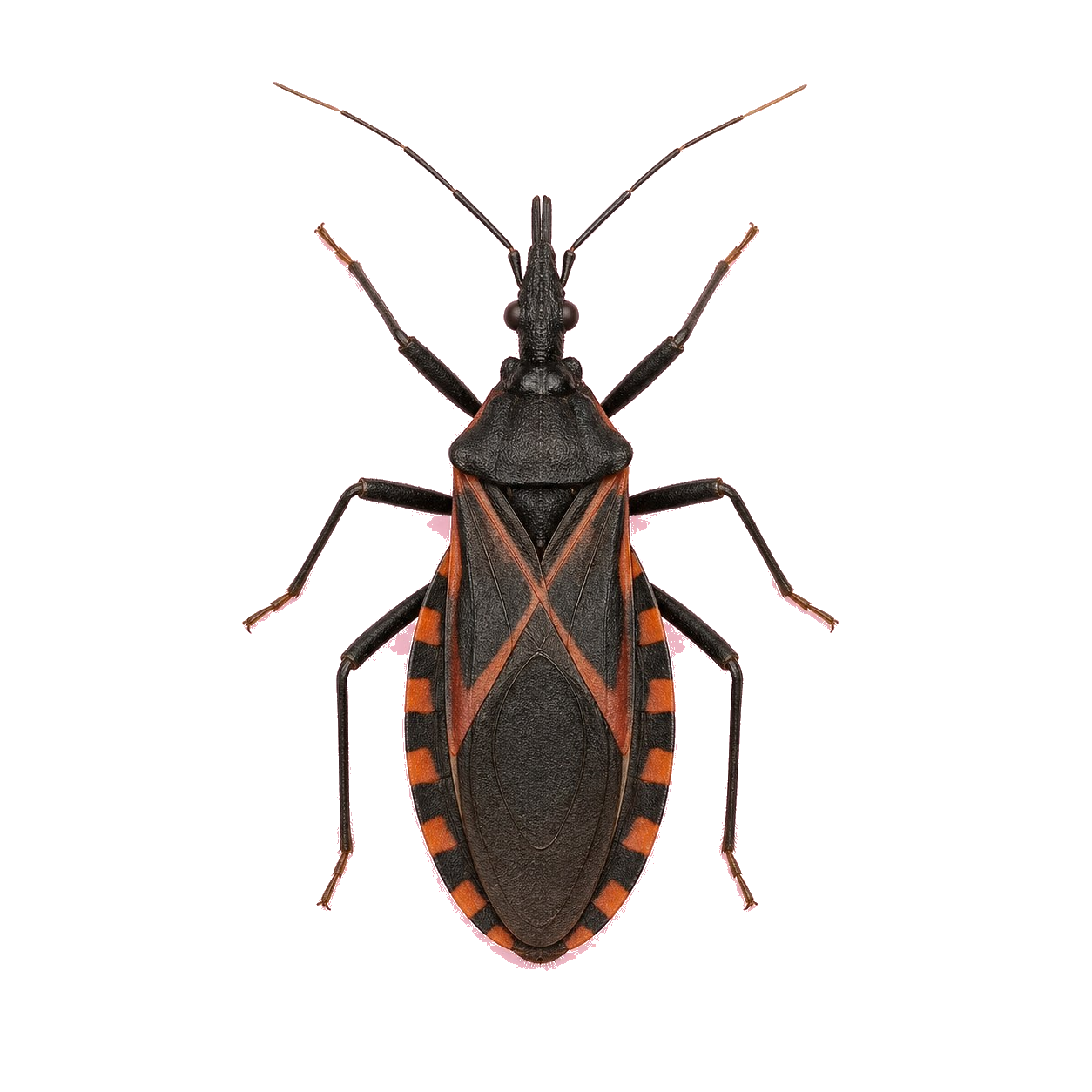
Triatoma sanguisuga, the most common kissing bug species found in Florida
Late spring marks the beginning of prime season for an insect that has been getting serious attention from researchers at the University of Florida. Kissing bugs, formally known as triatomines, are blood-feeding insects documented across Florida for years. New research is making clear just how widespread they are and what that means for people living in this part of the state.
A decade-long study by scientists at the University of Florida and Texas A&M University, published in a peer-reviewed scientific journal, collected more than 300 kissing bug specimens from 23 counties across Florida. Around 30 percent of those bugs tested positive for Trypanosoma cruzi, the parasite responsible for Chagas disease. Roughly a third of the specimens were found inside homes, and those bugs had primarily fed on human blood.
What Is Chagas Disease?
Chagas disease is a parasitic infection caused by Trypanosoma cruzi. It can progress through an early stage with flu-like symptoms and a chronic stage that, in some cases, may lead to cardiac complications years after the initial infection. The Centers for Disease Control recently classified Chagas disease as endemic in the United States. Florida is estimated to have up to 20,000 residents living with the infection, the third-highest burden of any state in the country.
In Florida, Chagas disease is not required to be reported to local or state health departments, which means the true extent of the disease is not fully known. Researchers at UF Health are actively working to establish better statewide monitoring.
About 250,000 to 300,000 people are estimated to be living with chronic Chagas disease in the United States. Florida ranks third nationally for disease burden, with up to 20,000 estimated cases. (Source: University of Florida, 2026)
How Kissing Bugs Get Into Homes
These insects are nocturnal. They are most active after dark, entering homes through gaps in screens, cracks around doors and windows, and other small openings. They are drawn to light and to the carbon dioxide people exhale during sleep, which is how the bugs end up near faces and how they earned their name.
Standard insect repellents do not repel kissing bugs. UF researchers have specifically noted this, and it speaks to why proper home sealing and professional inspections matter more than a can of spray when it comes to keeping these insects out.
Activities like hunting and camping also raise the risk of exposure, since kissing bugs are present in wooded areas throughout Florida. Wild animals including opossums, raccoons, and armadillos can carry the parasite, which is part of how it circulates in the local environment.
What to Do If You Find One
If you come across an insect you do not recognize indoors or around your home, do not handle it directly. Take a photo if it is safe to do so, note where you found it, and contact a pest professional. A thorough inspection can identify potential entry points and help you understand what activity may be present on the property.
If you have concerns about potential exposure, a simple blood test is available through UF Health and other labs around the country. Your primary care doctor can advise on whether testing makes sense based on your history.
Staying Current
At Pest Pro, we follow the research coming out of UF and other institutions so we can give our customers the most informed service possible. If something is showing up around Central Florida that homeowners should know about, we will share it here. Questions about what you are seeing in or around your home? Give us a call.
Questions about pest activity at your property? Schedule a free inspection or call (407) 922-2276. Serving Central Florida Mon–Sun 8AM–6PM with 24/7 emergency line.
Sources: Kieran Browne et al., PLOS Neglected Tropical Diseases, July 2025; Norman L. Beatty, M.D., FACP, UF Health / Doctor Gator, April 2026; CDC, Emerging Infectious Diseases, September 2024.