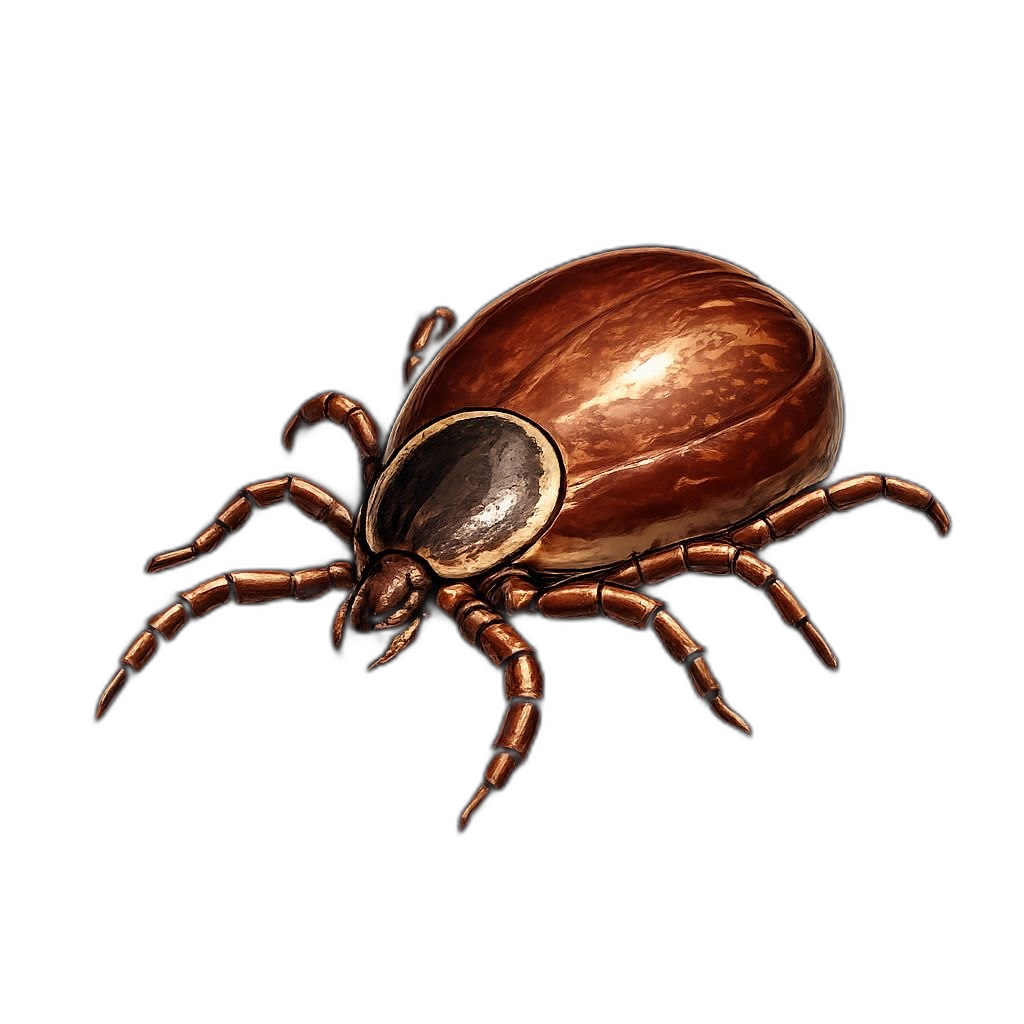
New data from the Centers for Disease Control and Prevention paints a clear picture of where tick activity is headed in 2026. Nationally, emergency room visits for tick bites are running at 71 per 100,000 ER trips, the highest level in nearly a decade, and more than double the historic average for this time of year. The Southeast region, which includes Florida, is tracking at 40 per 100,000 ER visits and climbing.
Experts point to two factors driving the surge: a warmer-than-average winter that didn't reduce tick populations the way cold winters typically do, and an early spring that pushed tick activity into gear ahead of schedule. For Central Florida, where ticks are already active year-round, the combination means an elevated baseline heading into the peak months of May and June.
What Ticks Are Actually in Central Florida
Florida has several tick species, but three are most relevant to residents of Orange, Osceola, Seminole, Lake, and Polk counties.
The blacklegged tick, also called the deer tick, is the species that carries Lyme disease. It's common throughout Florida and tends to be found in wooded areas with leaf litter and brush. Nymphs are extremely small, about the size of a poppy seed, which is part of why bites often go unnoticed until a rash or symptoms appear.
The American dog tick is larger and more commonly found in grassy areas, field edges, and along trails. It doesn't carry Lyme disease but is a vector for Rocky Mountain spotted fever, which despite its name is well-documented across the southeastern United States and can be fatal if not treated promptly.
The Lone Star tick is the third to know. It's an aggressive biter and is expanding its range northward and eastward across the South. Beyond the diseases it carries, the Lone Star tick is the vector for Alpha-gal syndrome, a condition in which the immune system develops an allergic reaction to a sugar molecule found in red meat and dairy. People who develop Alpha-gal can have severe reactions to beef, pork, and lamb, sometimes years after the triggering tick bite, without ever connecting it to the tick.
Key fact: Ticks typically need to be attached for 36 to 48 hours before they can transmit most diseases. Finding and removing a tick promptly, especially within the first 24 hours, significantly reduces disease risk. Check thoroughly after any time outdoors.
Where Ticks Hide in Your Yard
One of the most common misconceptions about ticks is that they're primarily a trail or woods problem. In reality, a significant portion of tick bites happen in residential yards, particularly in areas where conditions favor tick survival: tall grass along fence lines, dense mulch beds, leaf litter that hasn't been cleared, overgrown vegetation along the property edge, and areas with heavy shade and moisture.
Ticks don't jump or fly. They position themselves on vegetation and wait for a host to brush by, a behavior called questing. A neatly maintained yard with short grass and cleared leaf litter gives ticks far fewer places to wait.
What You Can Do
Awareness and routine checks are the most practical defense. Check yourself, your children, and your pets thoroughly after time outdoors, including the scalp, behind the ears, under the arms, behind the knees, and around the waist. Shower soon after coming indoors. Check pets before they come inside.
If you find a tick attached, remove it with fine-tipped tweezers, grasping as close to the skin as possible and pulling upward with steady pressure. Don't twist, crush, or apply heat. Clean the bite area and wash your hands. Note the date, and monitor for symptoms over the following weeks.
If you're concerned about tick activity around your property and want to reduce habitat and exposure, that's something we can address professionally. Give us a call.
Have a pest problem that needs treatment? Schedule a free inspection or call (407) 922-2276. Serving Central Florida Mon–Sun 8AM–6PM with 24/7 emergency line.
Sources: CDC Tick Bite Data Tracker, updated April 12, 2026; Patch.com Florida, April 16, 2026; University of Florida IFAS Extension.