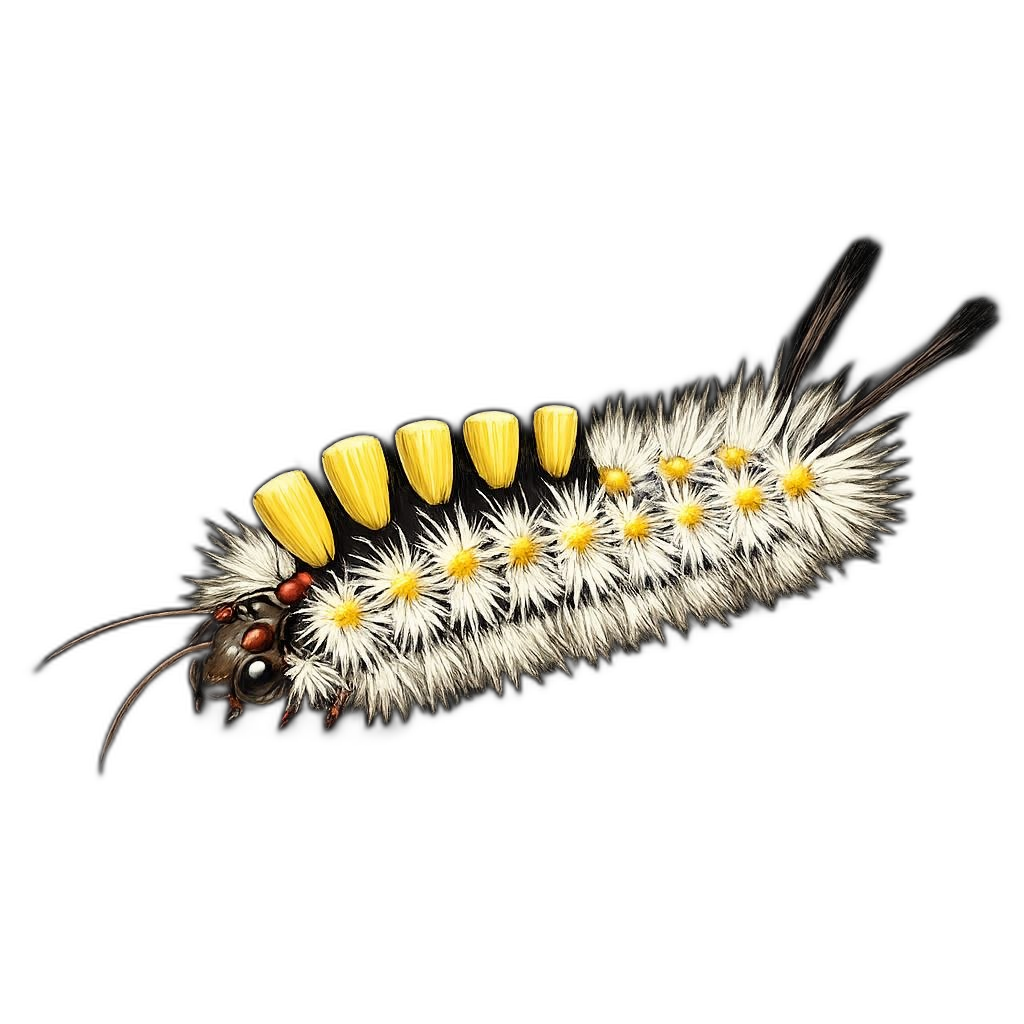
If you've been outside near oak trees lately and noticed fuzzy white and yellow caterpillars on the ground, on your car, or raining down from above, you're not imagining it. Tussock moth caterpillars are active right now across Central Florida, and Seminole County has already issued public alerts urging residents to use caution.
This happens every spring. But this year the numbers have been notable enough that multiple local news outlets picked up the story, and some neighborhoods have seen them covering sidewalks, porches, and vehicles in significant numbers.
What Are Tussock Moth Caterpillars?
There are three species in Florida: the fir tussock moth, the white-marked tussock moth, and the definite tussock moth. The fir tussock moth is the most common in our area. All three feed primarily on oak trees, which is why oak-heavy neighborhoods tend to see the worst of it.
The caterpillars are distinctive looking. They're covered in dense tufts of hair that are usually white or pale yellow, with some having red or black accent markings. That fluffy appearance is deceptive. The hairs are the problem.
Why Do They Cause a Rash?
The hairs on tussock moth caterpillars are called urticating setae. They're designed to break off on contact and embed in skin, eyes, or mucous membranes. The body's reaction to these foreign hairs is what produces the rash, which typically looks like hives or a red, itchy welt pattern at the contact area. For most people it's uncomfortable but not dangerous. Those with sensitive skin or allergies can have stronger reactions.
What catches people off guard is that you don't have to pick one up. Brushing against a branch where they've been, touching a surface they've crawled across, or even getting one blown into you by the wind can be enough to trigger a reaction. Their shed cocoons carry the same hairs and can cause the same response.
What Should You Do Right Now?
If you have oak trees in your yard, be aware of what's on the ground underneath them and what's falling. Keep children and pets clear of areas where caterpillars are active. Wearing gloves if you need to handle anything from the ground near oak trees is a reasonable precaution.
One thing worth knowing: experts at the University of Florida advise against spraying your trees. Tussock moth caterpillars are a food source for birds and play a role in the local ecosystem. Spraying is also largely ineffective given the numbers involved during peak season, and the caterpillars will be gone by late April or early May as they complete their life cycle and form cocoons.
Is This Something Pest Control Can Help With?
Honestly, not in most cases. This is a seasonal event driven by nature rather than a structural pest problem. The caterpillars don't infest homes, damage foundations, or pose the kind of ongoing threat that warrants a treatment program.
If you're dealing with other pests around your property this spring, that's a different conversation. Give us a call and we'll take a look.
Have a pest problem that needs treatment? Schedule a free inspection or call (407) 922-2276. Serving Central Florida Mon–Sun 8AM–6PM with 24/7 emergency line.
Sources: University of Florida IFAS Extension; WESH 2 News, March 2026; Seminole County public alerts, April 2026.